
LOST is a new performance work by Terry Smith, created with the Sacconi Quartet, composer Ian Dearden, performers Zoe Glen, Katrina Binks and Henry Uniacke.
Built around Bach’s The Art of Fugue, LOST brings four musicians and three performers into a shared system of repetition, duration and change.
Music and movement are constructed from short sequences governed by a simple set of instructions. These sequences loop, overlap and move in and out of sync, with changes in speed, volume, intensity and silence.
As the sequences repeat, things begin to shift and disappear.
The Loft Space Folkestone
Saturday 3rd October Doors open at 5.30 performance promptly at 6 pm performance lasts approximately 35 minutes
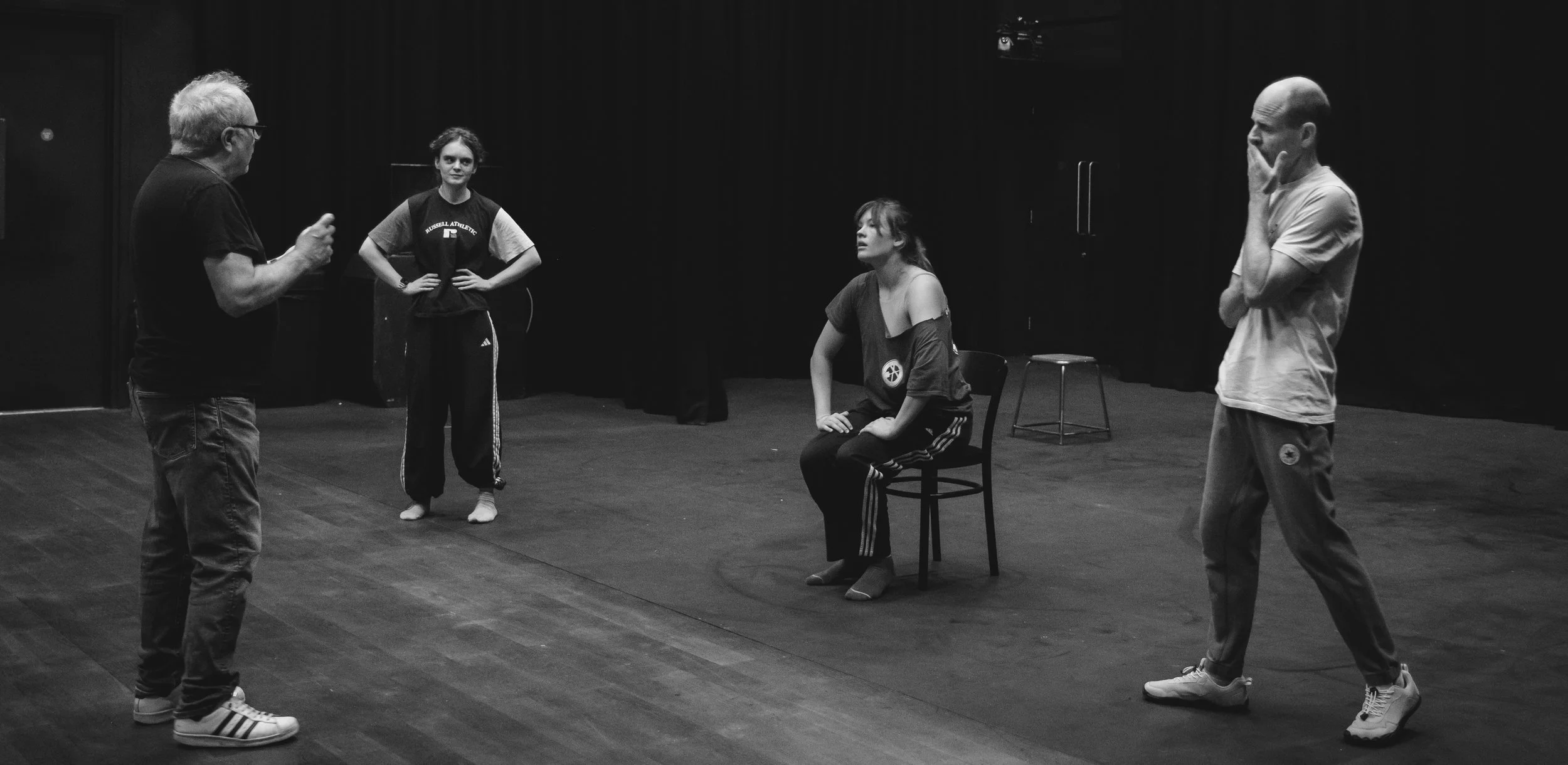
LOST began several years ago. Before it was called LOST it had another working title, Decomposing Bach.
At that point it wasn't really a work. It was more an idea.
About three years ago, invited myself to be an artist in residence with the Sacconi Quartet. They accepted. I was struck by their ambition to try new things and to test their own boundaries. So two years ago in 2024 we met at my studio for an open workshop led by Ian Dearden, a composer and sound designer I have worked with for many years.
We began with Bach.
The suggestion was to start with The Art of Fugue and in the possibility of taking the music apart, decomposing it. Removing notes. Breaking up phrases. Repeating things. Seeing how much could disappear before something else began to emerge.
This way of working is not new for me.
For many years I made interventions into buildings. I cut into walls, removed sections of existing architecture and changed spaces by taking things away.
Later, when I began making performances, I found myself doing something similar.
Taking things out.
Reducing.
Leaving the bare minimum.
What is left becomes the work.
What I have been able to add is something that has always been present in my drawings, repetition.
About a month before the first performance of LOST, Ian and I met in his London sound studio and returned to The Art of Fugue.
Our original idea was quite literal. We would begin removing notes from the score and see what happened to the music as more and more disappeared.
We had experimented with this during the earlier workshop with the Sacconi Quartet. But we quickly realised that to do it properly would take much longer than the time we had available.
So we changed direction.
Instead of removing the music note by note, we began disturbing it.
Slowing it down.
Dampening sounds.
Repeating sections.
Allowing fragments to become separated from one another.
Allowing things that had belonged together to move apart.
At the same time I began working with Zoe Glen, Katrina Binks and Henry Uniacke.
I wanted the performers to work through a similar process.
We constructed simple sequences of actions and began repeating them. But repetition is never really repetition. Something changes each time. A movement takes slightly longer. Someone arrives too early or too late. An action disappears. Things that were together move out of sync.
That became important.
Music and dance both depend upon repetition. Bach was constantly repeating, reversing and transforming musical material. Much later, composers such as Steve Reich and Philip Glass made repetition central to their work.
But repetition can also be a way of trying to hold onto something.
You repeat something because you don't want to lose it.
And every time you repeat it, it is slightly different.
I have become increasingly uncomfortable with texts that tell us what an artwork is about before we experience it.
You read that a work is about something, and then you watch the work looking for those things.
The work becomes an illustration of the text.
I don't want that.
I want the audience to encounter the work first.
To see what they see. Hear what they hear
Make their own connections.
To notice things I may not have noticed.
LOST comes from thinking about repetition.
About Bach.
About taking things apart.
About what happens when something that was there is no longer there.
And about what remains.